
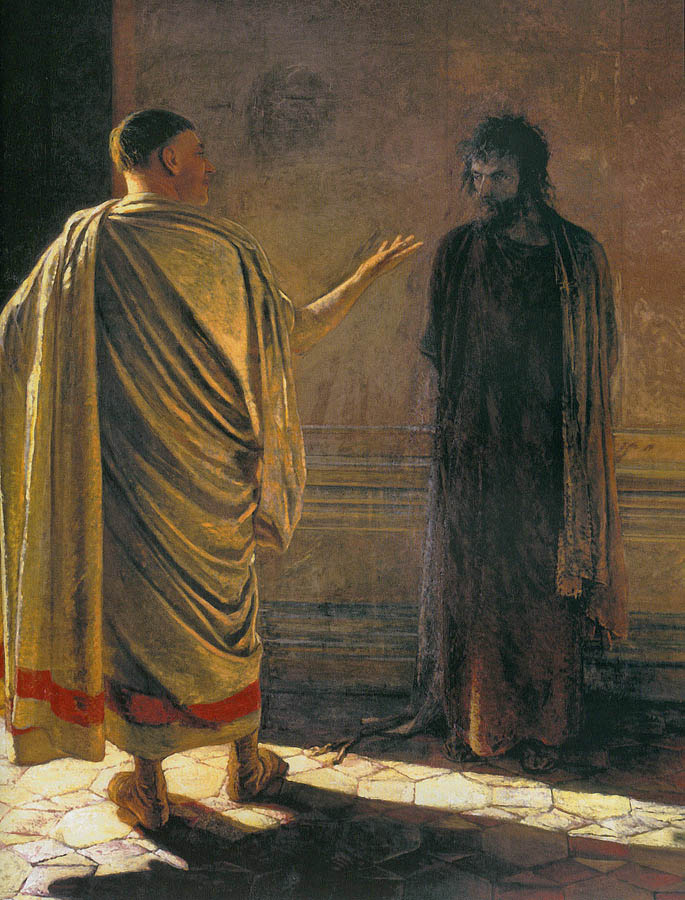
I asked in a previous blog if it matters whether something be true as long as it provides a level of stability for society. But after writing that, I see the necessity to clarify that I am not referring to objective truth. This especially includes matters where one knows the difference between good and evil (assuming one chooses with a mind generally uncorrupted by a life of vice).
But that blog reveals my ponderings on whether institutions are any more than mental concepts we hold in common. We assume an institution exists, but as far as its existence is concerned, I assert that its true existence is merely a mental concept of something we collectively hold to be true.
In addition to that, we take for granted the contingency of its existence. The institution can only exist as long as we collectively imagine its existence. At times, we may not like a particular institution, but we still agree with all others that it exists.
This shared assumption held by all in the existence of these institutions — mere mental objects misconceived to be physical — impact human behavior to create, maintain, and modify such entities as physical infrastructure, laws, corporations, governments, national borders, religion, etc.
Real truth, independent of the mind
Our interpretation of objective truth, or reality, itself may very well be the driving force behind the establishment of all these agreed-upon institutions we hold collectively to exist.
Objective truth does not reside within these institutions. Rather, it underlies them.
The institution is a human innovation. It is the result of what we interpret to be objectively true. Yet, it’s an imperfect interpretation. Despite that, however, our truth-seeking behaviour throughout history demonstrates an awareness that objective truth is a reality, even if we were to deny there is such objective truth in so many words.
Grossly imperfect interpretations misconceived as objective truth
There are times when we fail to realize our interpretation poorly reflects objective truth. Sometimes, a widely-held interpretation may very well be wholly lacking. The danger arises when when we confuse that wholly lacking interpretation with objective truth itself.
To reiterate, human interpretations of objective truth, or reality, are always imperfect. However, the levels of such imperfection (or levels of accuracy) vary in relation to the objective truth itself.
Things get worse when we confuse those gross misinterpretations with objective truth; or once we experience the blurring of the line between gross misinterpretations and objective truth, or reality.
When we no longer see the difference
Here are a few examples where we fail to distinguish between our gross misinterpretations of objective truth, or reality, and objective truth, or reality, itself:
- A collection of written texts reveals past human attempts to understand reality over the course of time. Little would the authors know that a few centuries later, an influential few would anthologize their writings with those of others, asserting a univocality transcending them all. That one voice, they say, was in reality that of God himself.
- In other words, past attempts to interpret objective truth, irrespective of their levels of accuracy, become objective truth itself for millions, if not billions, for centuries.
- Once the many acquiesce their rights to the few for the sake of societal order, the few at times perform actions objectively unjust. Yet, many who don’t hold such authority mistakenly assert a rightness of such actions since they were administered by one in authority.
- By way of force, one group subjugates another. The subjugating group misinterpreted in its past somewhere the existence of a divine mandate — albeit in reality a mental concept, a great fiction — to destroy neighboring groups, resulting in enslavement, genocide, land displacement, plunder, mass rape, etc. (all of which, again, are falsely portrayed as good, or divinely mandated).
- Speaking of slavery, a few in authority misinterpret objective truth, asserting it is objectively true that some races are inferior to others, including their own. They may even assert that the one supreme being ordained this hierarchy of races, mandating such evils in written texts.
- The few in authority double down on past misinterpretations of nature. Very bright individuals from the past, having been alive without the accumulated knowledge found on Google today, grossly misinterpreted what was objectively true. Those less intellectually curious, yet granted authority by the many, actively persecute contemporaries lacking that political or religious authority even though their understanding far more accurately portrays reality.
- A prime example here involves the Church of Rome’s persecution of Copernicus and Galileo over the truth of heliocentrism. Rome stood by the false notion of geocentrism due to great intellectuals of the past such as Aristotle and Ptolemy.
My (even better) attempt to clarify (in summary)
All right, let me try this again. In essence, my argument is this:
- There is objective truth.
- We don’t know all of this truth, and may never will.
- We imperfectly interpret this truth.
- Even though our interpretations are always imperfect, each interpretation maintains a level of accuracy relative to objective truth itself.
- Our interpretations are the basis for our known institutions; i.e., the mental constructs we hold in common that such entities exist.
- These foundational interpretations may be grossly inaccurate only to be misconceived as objective truth itself.
- A blurred distinction between any wholly lacking interpretations and objective truth itself has devastating effects on humanity.
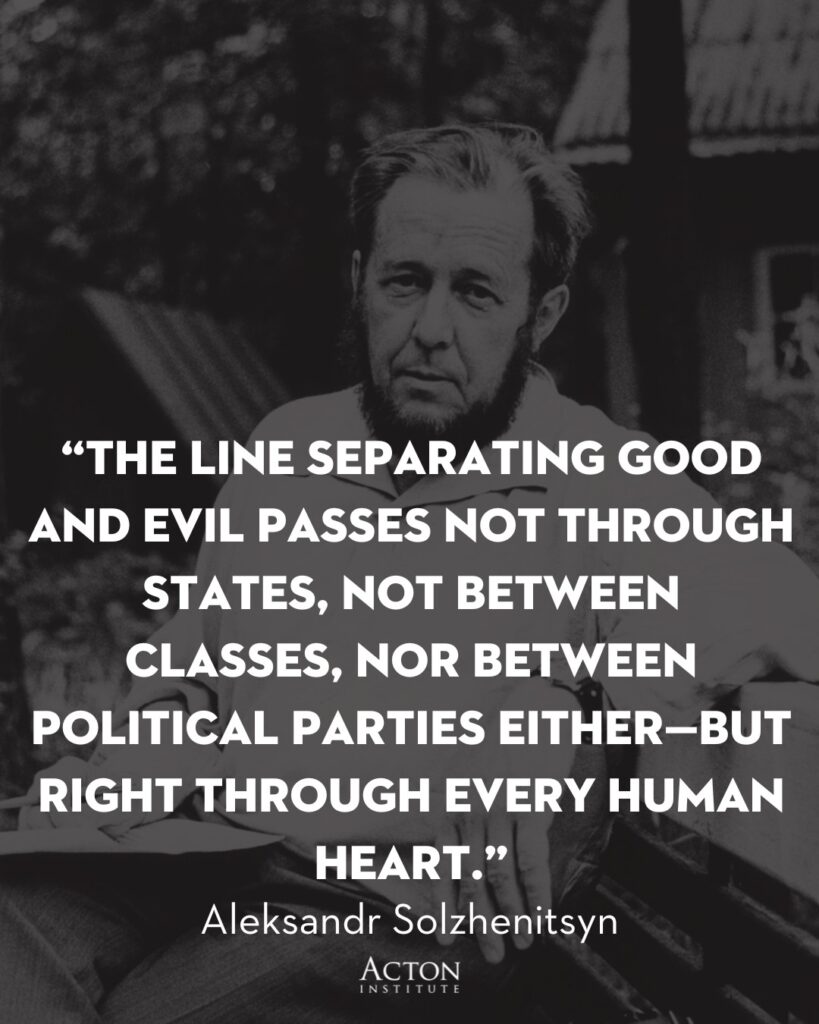
But I could be wrong too
It’s likely anyway that my thoughts represent another instance of a wholly lacking interpretation of objective truth.
There’s plenty of room for error in my assertion of the following:
- The history of humanity’s attempts to understand the world more accurately demonstrates our awareness of objective truth. I would like to think our search for objective truth accurately indicates that such objective truth exists.
I understand an objection may be that even though such behavior constantly presents itself, it doesn’t follow that objective truth exists. It may be the case that our truth-seeking behavior is utterly futile because objective truth doesn’t exist whatsoever. Perhaps we humans are wholly mistaken. Our plight for true knowledge may simply be a cruel, dark comedy.
I can only hope my assertion here, however, is right.
I really hope I am right.