
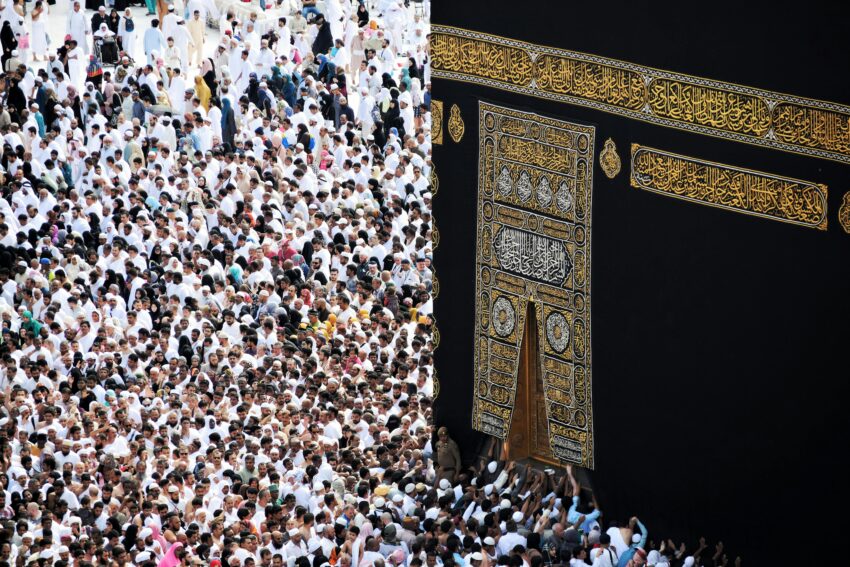
If billions believe it, then it must be true.
Not really.
Christianity and Islam each have more than 2 billion adherents worldwide. Their claims of God’s nature vastly differ. Since they differ, we’re left to conclude the following:
- Christians are correct that Jesus is God
- Or, Muslims are correct that Jesus is not God
Who’s right?
After all, there are billions of people who say one of these is true. That means there is a set of billions that is correct, and a set of billions that is wrong.

Fellow humans make it ‘true’
Each of these groups has leaders who assert one is true and the other is false. They’re gifted in messaging. They’re quite convincing.
Along with these leaders are their adherents. These are your family members, friends, and neighbors — people you know. They generate the necessary enthusiasm that seemingly confirms their claim as undeniably true.
Two causes that can’t simultaneously exist
“A relationship with Jesus changed my life,” a Christian may say.
“Submission to Allah changed my life,” a Muslim may say.
The question now becomes which one’s life was truly changed and which life wasn’t.
It’s not possible for Allah to change the life of a Muslim while Jesus changes the life of a Christian simultaneously. This may be difficult for the religion pluralist to read, but consider the following:
- Jesus is the second person of a three-person God;
- Allah is of absolute oneness without any plurality of persons.
In both cases, God’s nature is different. It’s impossible for God to be triune while simultaneously holding “absolute oneness” (Tawhid). Therefore, it remains that these two causes cannot possibly exist simultaneously. Without the existence of a causal being, the effect itself cannot possibly exist.
We’re left to conclude that either the life of the Christian or the Muslim (or both) is not transformed.